The conception of what eventually became the Federal Reserve happened in 1910 when seven bankers and economic policy makers had a secret meeting on Jekyll Island, Georgia. Led by Senator Nelson Aldrich, these men came up with the plan for establishing a private central bank in the United States. Abraham Andrew, the Assistant Secretary of the Treasury attended, along with several bankers; Frank Vanderlip, President of the National City Bank of New York and representative for the Rockefeller Family. Henry Davison, senior partner of the J. P. Morgan Company. Charles Norton, President of the First National Bank of New York which. Benjamin Strong, head of J. P. Morgan's Banker's Trust Company and later the first head of the Federal Reserve. Paul Warburg, partner in Kuhn, Loeb & Company and representative for the Rothschild family.
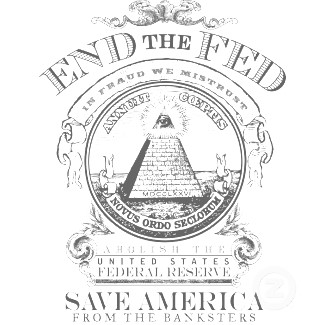
Prior to implementing the income tax in 1913, about a third of the federal treasury came from liquor taxes. By 1920, the income tax funded about two-thirds of the federal revenue. The forceful drive towards national prohibition started in 1913 and the 18th amendment was ratified on on January 16, 1919. Though, by 1913, nine states were already under state prohibition laws. It seems that either prohibition was engineered to support the implementation of an income tax or the income tax was necessary to make up for the funds lost from prohibition. The income tax is primarily used to pay off interest to the Federal Reserve. At the same time, the FED uses artificial interest rate manipulation and control of the amount of available currency to create profits for the banking cartel. When the bubble they create bursts, the banking cartel buys up our real assets, centralizing their wealth. As you can see in the image below, roughly %40 of our debt is owed to the Federal Reserve and government accounts. This got me thinking, could Prohibition, the Federal Reserve and Income Tax all be related?
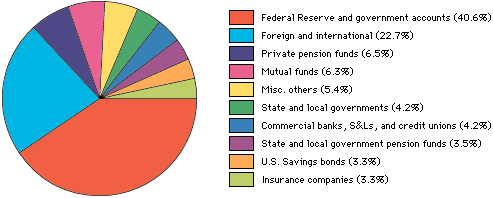
Who Do We Owe? - Image from the U.S. Debt Clock
Suppose you take out a $300,000 loan for a house at %6 interest to be paid over 30 years. Without considering property taxes or other expenses, you end up paying $1798.65 a month and $647,514 when your house is finally paid off. The bank makes $347,514 off of your loan in interest. If the bank needs to borrow money from the FED to lend to you, they get it at artificially low rates, let's say 2%. So they need to pay that interest back to the FED, but they still make $248,324 dollars, from little to no effort. However, the FED has to print that loan and increase the money supply, which devalues the dollar. Since the Federal Reserve was established in 1913, the U.S. dollar has lost %96 percent of its purchasing power due to inflation. That means that if a dollar was worth $1 in 1913, it's now worth only 0.04 cents.
Imagine a fictional scenario, there is only $100,000 dollars in circulation, one bank and the Federal Reserve. $50,000 is being saved in banks and $50,000 is in people's wallets. The bank decides to loan the $50,000 it has at 6% interest for 30 years. It is technically not possible for the recipients of this loan to pay the banks back because it would require $107,920 dollars, which is more than the total amount of money in the system. So the FED has to create more money out of thin air and lend it to the banks to inject into the monetary system. Let's say the FED created another $100,000 and there is now a total of $200,000 dollars in the system. It looks like there is more money available, but because that money is Fiat Currency and not related to any physical substance like gold, each dollar would have half the purchasing power. The banks also need to pay off their loan from the FED but it's the recipients of the initial loan that end up paying the cost, the banks are loosing no money in the deal. The banks are still making massive profits and the Federal Reserve is helping them do it. The national debt continues to increase and the value of the dollar continues to decrease as more money is created. There is no other option but a continual spiral downward and that is just the way it was planned
If you check the money supply on the Federal Reserve's Website you can see that there is about $1.7 trillion dollars in people's pockets and $8.6 trillion dollars if you include savings. The national debt is currently around $13 trillion. So even if you took all the money that was available in the United States, you still wouldn't be able to pay off the national debt.
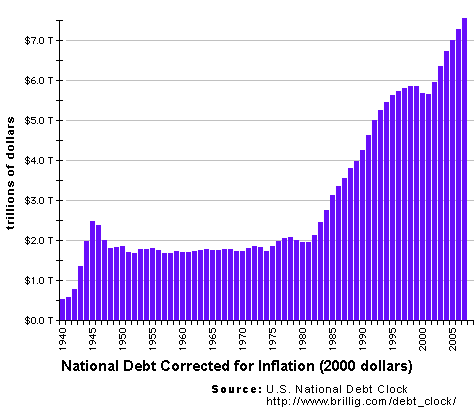
How the National Debt has grown over time.
Visit the U.S. Debt Clock
So why would the banking cartel want to bankrupt the country? During economic recessions, bankers can snatch up real physical commodities, land and other assets. They are essentially centralizing any real wealth that is available in our country. At the same time they beating us into submission through economic manipulation. When our monetary system totally fails, they will do what they did in 1913, but this time on an international level. One purpose of the Federal Reserve was to standardize our currency and centralize the banking system, so instead of different states using different currency, the whole country would use the same Federal Reserve Notes. The next step is to do the same thing with countries around the would and adopt a single international currency with a International Federal Reserve that can manipulate the world economy through interest rates and money supply. The Euro in Europe was only a test run. Eventually we will see a single currency for the America's, a single currency for Asia and a perhaps a single currency for the Middle East if we can bomb them into submission. From there it's just one more step to a New World Order with one international form of money.


